
Diagnostics
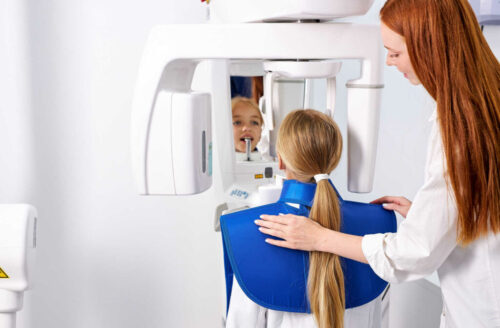
We believe that the foundation of a beautiful smile is a healthy one. To provide the most accurate treatments, we utilize advanced diagnostic tools that allow us to see what is happening beneath the surface of your teeth and gums.
Why Are Dental Diagnostics Important?
Think of diagnostics as a roadmap for your oral health. While a visual exam is essential, it only tells part of the story. By using state-of-the-art technology, we can identify potential issues long before they become painful or expensive problems.
Our diagnostic process helps us identify:
-
Hidden Decay: Spotting cavities that form in between the teeth where a toothbrush can’t reach.
-
Bone Health: Detecting tumors, cysts, or infections present in the jawbone.
-
Developmental Tracking: Determining the placement of unerupted teeth and the presence (or absence) of permanent teeth in children.
-
Structural Integrity: Evaluating the health of existing fillings, crowns, and implants.
Safety & Innovation: Digital Radiography
We understand that some patients have concerns about radiation. That is why we have invested in state-of-the-art digital equipment to ensure your visit is as safe as it is thorough.
-
90% Less Radiation: Modern digital radiographs require significantly less radiation than traditional film X-rays used in the past.
-
Instant Results: Images are available immediately on our monitors, allowing us to walk you through the findings in real-time.
-
Enhanced Comfort: Our digital sensors are designed to be more comfortable for the patient than old-fashioned film packets.
Your Safety is Our Priority: Even though modern guidelines have waived the strict requirement for lead shielding due to the low-dose nature of digital X-rays, we still provide all patients with a collared lead apron for your peace of mind and extra protection.
What to Expect During Your Consultation
Diagnostic imaging is typically a quick, painless part of your routine check-up. Depending on your specific needs, we may perform:
-
Bitewing X-rays: To check for decay between specific teeth.
-
Periapical X-rays: To view the entire tooth from crown to root.
-
Panoramic X-rays: To get a comprehensive view of your entire mouth, including the jaw and sinuses.