
Sealants & Fillings
We use both sealants and fillings to ensure your child’s teeth stay healthy. While they may seem similar, they serve two very different purposes: Sealants prevent damage, while fillings restore it.
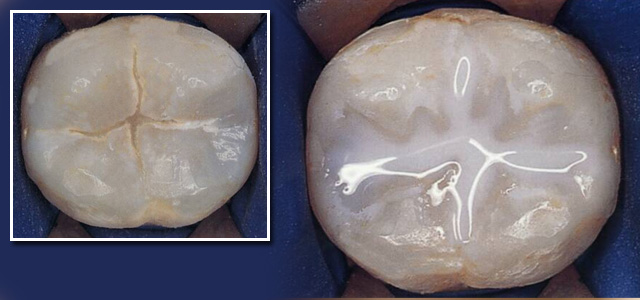
Dental Sealants: The Ultimate Preventive Shield
Sealants are a protective barrier applied to healthy teeth that have not yet suffered from decay. We typically apply them to the chewing surfaces of the permanent molars.
-
Why Sealants are Needed: Molars have deep grooves and crevices where food and plaque easily settle. Bacteria feed on leftover carbohydrates in these grooves, releasing oral acids that dissolve enamel and cause cavities.
-
How They Work: Sealants act as a tough, plastic shield that fills these grooves, preventing bacteria and plaque from making direct contact with the enamel.
-
The Procedure: The process is quick, painless, and does not require numbing. We clean the tooth, brush on the sealant material (similar to applying nail polish), and harden it with a special curing light.
-
Maintenance: While sealants significantly reduce cavity risk, they do wear down over time and will be monitored during recall exams to see if they need replacement.
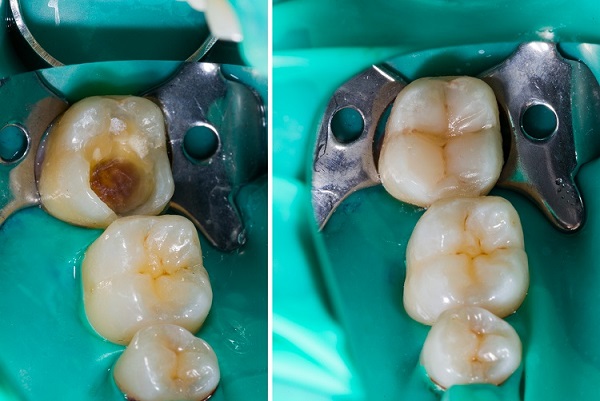
Dental Fillings: Restoring Tooth Health
When tooth decay has already caused a cavity (a physical hole in the tooth), a dental filling is required to restore the tooth’s structure and function.
-
The Cause of Decay: Oral acids dissolve essential minerals like phosphorus and calcium from the enamel. If left untreated, this weakness turns into a cavity.
-
The Restorative Process: To treat the tooth, our dentist carefully removes the decayed enamel, cleans the area to eliminate bacteria, and fills the hole with a durable restorative material.
-
Why It’s Essential: A filling doesn’t just fix the hole; it seals the tooth to block out new bacteria, preventing deeper infections or the need for more invasive treatments later on.