
Nasal Breathing Assessment
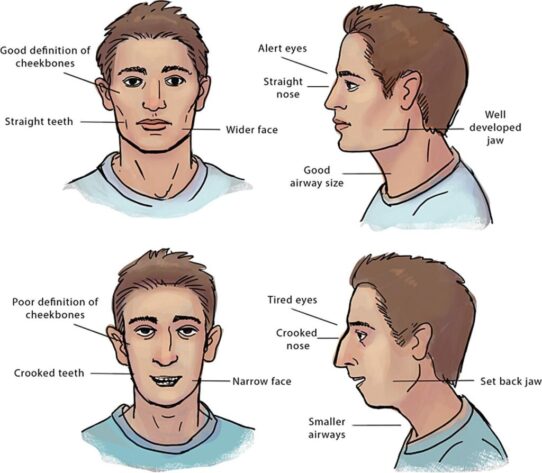
We pay close attention to how your child breathes. While it may seem like a simple habit, the difference between nasal breathing and mouth breathing significantly impacts your child’s craniofacial development—the way the bones of the head and face grow and shape over time.
The Role of the Tongue in Facial Growth
The tongue is one of the most powerful muscles in the mouth and acts as a natural “expander” for the upper jaw.
-
Healthy Nasal Breathing: When a child breathes through their nose, the tongue rests naturally against the palate (the roof of the mouth). This constant pressure helps widen the jaw, creating enough space for permanent teeth and supporting proper mid-face growth.
-
The Impact of Mouth Breathing: During mouth breathing, the tongue drops to a low, forward position to allow air to pass. Without the tongue’s support against the palate, the upper jaw can become narrow and the face may grow longer and flatter, a condition often referred to as “adenoid face.”
Why Proper Tongue Posture Fails
Even in children who primarily breathe through their nose, the tongue may fail to rest in the correct position. Common causes include:
-
Tongue-Ties (Ankyloglossia): A restrictive band of tissue that physically prevents the tongue from reaching the roof of the mouth.
-
Low Muscle Tone: Weakness in the tongue muscles can prevent it from maintaining a high resting posture.
-
Prolonged Pacifier or Bottle Use: Extended use of milk bottles and pacifiers during infancy can alter the resting posture of the tongue, pushing it downward and forward.
-
The Breastfeeding Advantage: Studies show that breastfed babies naturally adopt a superior resting tongue posture and are more likely to become predominant nasal breathers, setting a strong foundation for facial symmetry.
Long-Term Effects of Untreated Mouth Breathing
If left unaddressed, the combination of mouth breathing and poor tongue posture can lead to:
-
Dental Crowding: A narrow jaw lacks the space for permanent teeth to erupt straight.
-
Orthodontic Complexity: Narrow arches often require more intensive treatments, such as palatal expanders or braces, later in life.
-
Sleep Disruption: Mouth breathing is closely linked to snoring and pediatric sleep-disordered breathing.
Our Evaluation Process
During your child’s examination, we assess their breathing patterns, tongue mobility, and jaw structure. If we detect signs of mouth breathing or tongue-tie, we work with parents to create a plan that may involve myofunctional therapy, orthodontic intervention, or collaboration with an ENT specialist.